










Discover the Maize Research Institute "Zemun Polje": Scientific Research Organization Behind the PHENO_MaizE Project!
The Maize Research Institute – Zemun Polje is the leading research and development organization in Serbia, specializing in the development, production, and introduction of new high-yielding, quality maize hybrids, soybean cultivars, and small grain varieties, adapted to diverse agro-ecological conditions and growing practices, and suitable for varied purposes and uses.
History
The Maize Research Institute – Zemun Polje (MRIZP) was initially established on September 29, 1945, as a Federal Station for Plant Breeding and Production. Over the next 15 years, the organization underwent several name and status changes, and in 1961 it was established as a specialized research institution named the Maize Research Institute Zemun Polje. In 2009, MRIZP was organized as a scientific and research institution operating in compliance with the regulations governing the legal status of public services. In 2015, MRIZP was accredited by the Ministry of Education, Science, and Technological Development as a research and development institute within the field of biotechnical sciences – agriculture. Currently, MRIZP employs close to 300 people, of which 49 hold PhDs, five MScs, and 74 BScs.
In 2025, the Maize Research Institute Zemun Polje will celebrate a major milestone – 80 years of existence!
Activities
Research and Development
The Research and Development Sector includes: groups for the breeding of maize, soybean, and small grains; a group for agro-ecology and crop management; a group for biotechnology and biochemistry; a laboratory for molecular genetics and physiology; a laboratory for phytopathology and entomology, and the MRIZP gene bank, among others. The sector is dedicated to the development of maize hybrids, soybean cultivars, and small grain varieties of high-yielding potential and superb quality for different growing conditions, purposes, and needs. Activities include:
- Development and application of a ZP® crop production system for obtaining high and stable yields under diverse agro-ecological conditions.
- Development of technological methods and processing procedures for the production of food, feed, and for industrial processing.
- Maintenance and evaluation of maize genetic resources – close to 6000 accessions of local and introduced maize genotypes are stored in the MRIZP gene bank.
- Marker-assisted maize selection, molecular and nutritive characterization.
- Comprehensive study of pathogenic species and plant disease etiology, identification of sources of resistance to pathogenic species, and examination of the inheritance of resistance in genetically diverse breeding material.
- Educating and training experts.
Seed Production Activities
- Production of basic (foundation) and certified seed of ZP® maize hybrids, soybean cultivars, and small grain varieties.
- Drying, processing, and storage of seeds of ZP® maize hybrids, as well as soybean cultivars and small grain varieties.
- Field crop production on the in-company agricultural estates in Zemun Polje and Krnješevci.
Marketing and Advertising
Commercial and Financial Activities
Maize Breeding Program
Our maize breeding program is based on the inbreeding-hybridization concept, encompassing:
- Improvement of the source breeding material.
- Selection of maize inbred lines with good agronomic traits, combining abilities, improved tolerance to abiotic and resistance to biotic stress.
- Development and testing of maize hybrids.
- Conversion of ZP maize hybrids to cytoplasmic male sterility-based seed production.
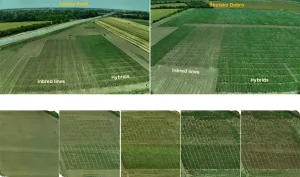
- Application of modern technologies (doubled haploids, genotyping, high-throughput field phenotyping).
- Utilization of winter nurseries in Chile and India.
A total of 837 ZP® maize hybrids have been released (registered) so far in Serbia, including:
- 695 hybrids with standard grain quality
- 50 sweet corn hybrids
- 27 white kernel hybrids
- 25 popcorn hybrids
- 10 cycloxidim-tolerant hybrids
- 9 hybrids with increased oil content
- 7 hybrids with red kernel
- 6 opaque hybrids
- 3 hybrids with increased protein content
- 3 varieties with colored kernel
- 2 waxy hybrids
In total, 175 maize hybrids were registered abroad, specifically in Poland, Romania, Italy, Greece, Slovenia, Macedonia, Slovak Republic, Bulgaria, Turkey, Russia, Ukraine, Kazakhstan, and others.
MRIZP accounts for close to 20% of maize seed sales in Serbia!
Major Ongoing Research Projects
EVA Maize Network (2019-2024) – European Evaluation Maize Network – German Federal Ministry of Food and Agriculture (PARTICIPANT). https://www.ecpgr.cgiar.org/european-evaluation-network-eva/eva-networks/maize
The aim of the project is to increase knowledge on valuable traits of publicly available crop germplasm, with a view to introducing these traits into public and private breeding programs.
GOOD (2023-2026) – Agro-ecology for Weeds – HORIZON-CL6-2022-FARM2FORK-02 (PARTICIPANT). https://www.goodhorizon.eu/
A multidisciplinary project aimed at creating and evaluating Agro-ecological Weed Management (AWM) systems, demonstrating that AWM adoption reduces herbicide use and enhances the sustainability and resilience of cropping systems.
CREDIT Vibes (2023-2025) – HORIZON-WIDERA-2021-ACCESS-02 (COORDINATOR). https://cordis.europa.eu/project/id/101059942
The project aims to enhance the training of highly skilled MRIZP researchers and non-research staff through twinning with the Agricultural Institute of Slovenia and the Aristotle University of Thessaloniki, Greece, to create new research opportunities, enhance funding, and strengthen the Institute’s excellence.
PHENO_MaizE (2024-2027) – Prisma program, Science Fund of the Republic of Serbia (COORDINATOR).
The Maize Research Institute Zemun Polje remains dedicated to advancing agricultural research, improving crop yields, and contributing to the global agricultural community!
This post was prepared with the financial support of the Science Fund of the Republic of Serbia. The content of this post is the sole responsibility of the Maize Research Institute Zemun Polje and does not necessarily reflect the views of the Science Fund of the Republic of Serbia.
Share the inspiration - spread the positivity to the world!
Explore More: Our Other Blog Posts

UAV Imaging in Controlled Airspace: A Practical Guide to Flight Permits in Serbia
20.06.2025
No Comments
Read More »

What We Have Learned So Far: A Few Lessons from Our UAS-Based Field Mapping Training
26.02.2025
No Comments
Read More »
